As a journalist, I find strength and security in the reassuring power and influence of the written and spoken word. In the words of Seamus Heaney: “Between my finger and my thumb The squat pen rests: snug as a gun.”
But at a time of Muslim bans, Brexit, and governmental failings to tackle the on-going refugee crisis, the pen seems to have distorted from a valiant sword, a weapon to defend, into a dagger in the back.
Celebrating migration
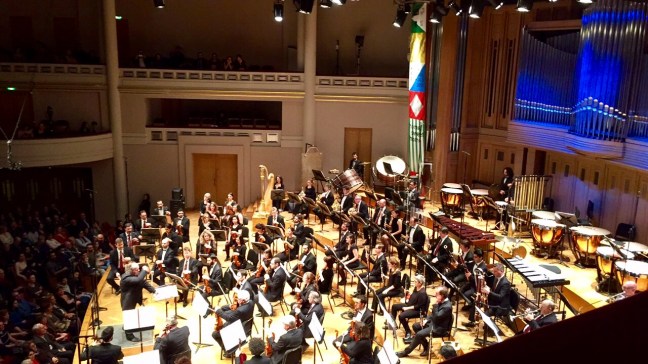
It seems the world has forgotten that migration can be a positive story. On 21 March, the Palais des Beaux-Arts in Brussels hosted Salaam Syria as part of this year’s edition of Klarafestival.
In Arabic, the word “salaam” is not only a greeting but also the word for peace. For one night only, the Syrian Expat Philharmonic Orchestra sat shoulder to shoulder with the National Orchestra of Belgium, distinguishable only by their choice of tie.
Music, and art more generally, is quintessentially the result of a blend of the most diverse cultural influences.
“I wanted to show the world the other side of Syria, the beauty; Syrian art and culture, the hopes and dreams of the population,” Raed Jazbeh, founder of the Syrian Expat Philharmonic Orchestra explained. “That’s why I decided to start a music ensemble that shows this other side of Syria.”
Why, then, does it seem that we are hell-bent or scapegoating or simply ignoring the very people who add significantly not only to our culture but also our lives?
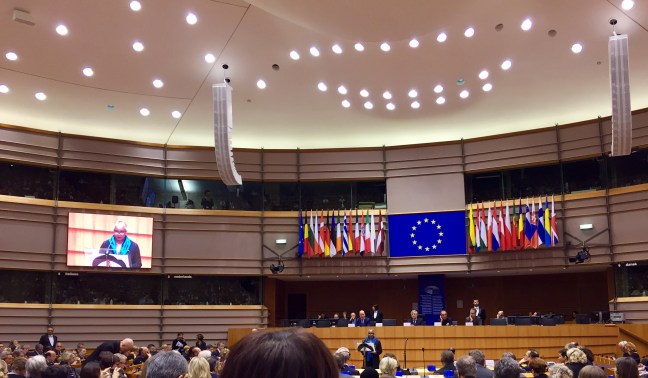
Just a matter of hours earlier, UNHCR Goodwill ambassador and world-renowned classical singer Barbara Hendricks delivered a speech at the European Parliament in honour of the 60th anniversary of the signing of the treaties of Rome.
But it wasn’t all celebratory.
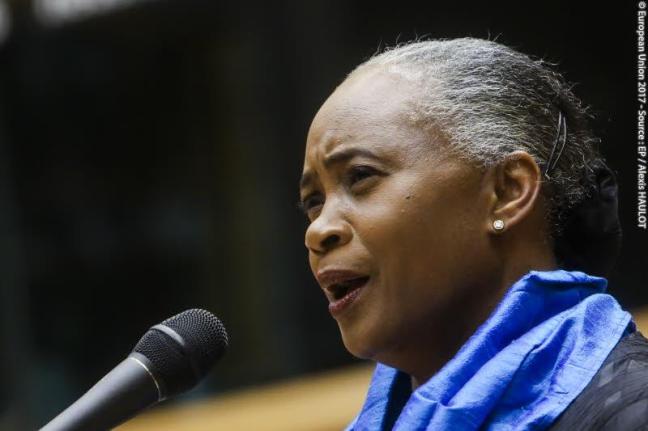 Copyright: European Union 2017 – Source : EP / Alexis HAULOT
“During the past 30 years I have been raising my voice on the behalf of refugees from all over the world. I have met too many heart-broken mothers, some who had to bury their children,” said Hendricks, who in 2002 was named Honorary Lifetime Goodwill Ambassador in recognition of her outstanding commitment to refugees.
“Europe’s failure to implement a collective response to the refugee crisis resulted in chaos at the borders, leading to a breakdown in the public’s trust in the capacity of government to manage a situation, thus playing directly into the hands of those who want to scapegoat refugees.”
Significantly, it was again through the medium of music that Hendricks reminded the packed Hemicycle of the words of poet and activist Warsan Shire.
“No one puts their children into a boat unless the water is safer than the land,” she recited. “No one would leave home unless home chased you to the shore.”
So what now?
The crises of our times offer a unique opportunity.
“We are all connected and members of the family of humanity. We must be fearless, daring to look at the one that we call ‘the other’, though threatening and different, and say ‘my sister, my brother, my child.’”
“We will never conquer hatred with even more hatred and we must not fall into the trap of losing our humanity as a means of saving humanity,” said Hendricks.
And as Europe’s leaders prepare for a weekend of celebrations in Rome, with one chair left notably empty, now more than ever is when we must also reflect on our failings and hopes for the future; to dare to see things differently and thus to act differently.
“At age 60, we’re still young. But the world needs us now to be the leaders that we can and must be,” said Hendricks.
“Each one of us has an important role to play. Together we are strong and we can produce a miracle that will take us from weakness to strength, from darkness to light, from injustice to justice, from war to peace, and from fear to love.”
“The stakes have never been higher. We do not have the right to fail, not only for our children but for all of the children of the world. Failure is simply unacceptable.”
In the words of Seamus Heaney: “Between my finger and my thumb The squat pen rests. I’ll dig with it.”
 Sophia C McBride
Excellent!!!
Xxx
Sent from my iPad
>
LikeLike