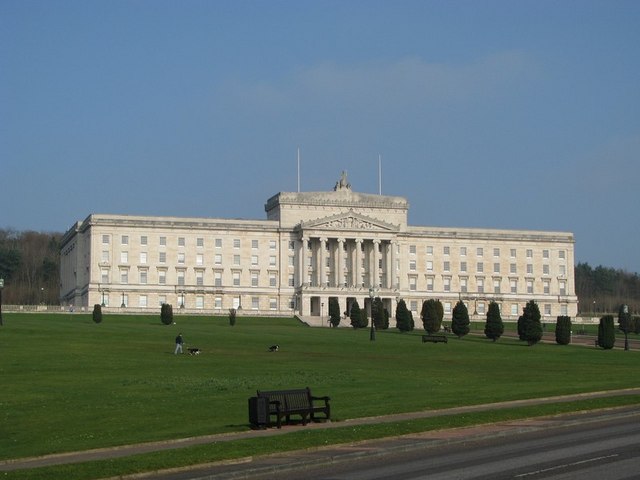
Image Credit: Ross via Wikimedia Commons
If you weren’t before, you are probably now pretty familiar with the highly conservative DUP who, even in the polarised environment of Northern Irish politics, many would regard as controversial.
A socially conservative party, the DUP reject any extension of abortion rights to align Northern Ireland with the rest of the UK and use special devolved administrative powers to block same-sex marriage. Not to mention the Islamophobic remarks, endorsements by terrorist organisations, climate change denial, and enormous financial scandals such as the Renewable Heat Incentive (RHI), which could cost taxpayers £400m.
But there’s another frightening twist to this tale. The delicate power sharing agreement in Northern Ireland, the result of years of painstaking work, was only achieved through the necessary neutrality of Westminster. Now that’s set to change.
The idea that any politician can serve as an impartial mediator while relying on DUP votes at Westminster is naïve at best. Theresa May’s proposed government is set to undermine an already precarious peace process, based on an assurance by the British government that it has no selfish or strategic interest in Northern Ireland.
A Tory deal with the DUP could challenge the 1998 Good Friday agreement, the peace deal that brought an end to what is euphemistically known as “the Troubles” and saw the creation of the Northern Ireland Assembly.
Sir John Major, who as prime minister was central to the start of the peace process in the 1990s, said an alliance with the DUP would jeopardise the UK government’s crucial role as an “impartial honest broker” in restoring power-sharing agreements in Northern Ireland.
“I am concerned about the deal, I am wary about it, I am dubious about it, both for peace process reasons but also for other reasons as well,” he told BBC Radio 4’s World at One, warning that if peace unravelled, Northern Ireland’s “hard men” could return to violence.
In fact, the DUP were the only major political group to vote against the Good Friday Agreement. The party founder’s infamous “Never, never, never” speech, delivered outside Belfast City Hall as he addressed tens of thousands of loyalists protesting against the signing of the November 1985 Anglo-Irish Agreement, may be remembered longer than his contribution to peace and stability in later years.
To add insult to injury, James Brokenshire has been re-appointed Secretary of State for Northern Ireland despite concerns about his neutrality, while Michael Gove, who denounced the Good Friday Agreement as a “capitulation to violence,” a “moral stain,” and a “a humiliation of our army, police and parliament,” is now back in May’s cabinet.
No one wants a return to the past, but it seems May is hell-bent on showing complete and utter disinterest in the future political stability of Northern Ireland.
Before the general election, May demonstrated complete indifference towards Northern Ireland in failing to visit the country at time of political dead lock and fragility. Now that the election has not lived up to its Tory landslide predictions, this indifference seems to have transformed into an utter disregard for the entire peace process.
Peter Hain, a former secretary of state for Northern Ireland told BBC Wales: “You’ve got to be neutral. If the prime minister is dependent on the DUP then all sorts of backroom deals will be done which could impact on the Good Friday agreement.”
These fears are echoed across the border in the Republic of Ireland, with former taoiseach Enda Kenny voicing his “concern” to May about the proposed deal’s potential damage to the peace process.
“The taoiseach indicated his concern that nothing should happen to put the Good Friday agreement at risk and the challenge that this agreement will bring. He also noted the absence of any nationalist voice in Westminster,” a government spokesman said.
For years nationalists did not have a voice, now they have one that is effectively being ignored.
The SDLP lost their three Westminster seats and, despite winning seven seats, Sinn Féin looks set to continue its policy of boycotting Westminster, meaning it will have no say in the formation of a new government in London.
In the words of SDLP leader Colum Eastwood: “Those of us who are democratic nationalists have to reflect on the fact that, for the first time for decades, there won’t be an Irish nationalist voice in Westminster – I think that’s a very sad thing.”
Mr Eastwood said the SDLP needs to “find a way of finding our voice again”, adding that the dominance of the DUP and Sinn Féin had produced an “arm wrestle that nobody can win”.
It certainly isn’t hard to see the irony behind May’s decision to try and strike a deal with a party who have repeatedly failed to form a coalition in their own local government for the past three months.
In the words of freelance journalist Siobhan Fenton: “When she called the general election, it was clear that Theresa May had little idea of the damage such a poll could cause Northern Ireland at a crucial time for power-sharing.
“By entering into a coalition with the DUP, it is even more apparent that she does not consider peace or stability in Northern Ireland a priority. Instead, she is sacrificing years of work on the peace process in order to get the keys to No 10.”
I have always said that Northern Ireland should be taken more seriously by Westminster, but a proposed Conservative deal with the DUP is set to upset the balance of power and peace, reigniting tensions both in Northern Ireland and across the United Kingdom.
The true coalition of chaos.
 Sophia C McBride
Well done.
Michael
Sent from my iPad
>
LikeLike